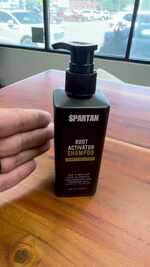
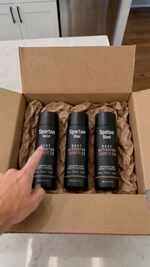
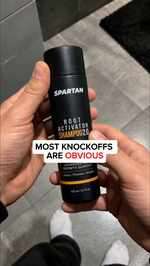
I’m not joking when I say this: hair-loss treatments can mess you up. They can turn a perfectly healthy, fertile man into someone who feels like his hormones have been completely thrown off. Your testosterone can drop. Your sex drive can disappear. Your body can start changing in ways you never expected. I know because I went through it myself. I read the entire list of side effects and still agreed to take it. My name is Michael. I’m 55. I’m a senior construction superintendent in commercial construction. I work in Texas, mostly in Houston and the surrounding areas. For the past few years, I’ve managed major projects for companies like Summit Builders and Horizon Contracting — shopping centers, logistics warehouses, office complexes. Hard hats, dust, morning meetings in site trailers, meetings with clients right there on the job site under the Texas sun. It’s a job where you’re constantly in front of people. Where people judge you before you’ve even opened your mouth. And where your appearance under that hard hat isn’t really about beauty or vanity. It’s about how much people trust you with money and responsibility. A superintendent with thinning hair and a shiny crown gives off less confidence than someone who looks put together. That’s the reality nobody talks about out loud. A little over three years ago, I was 52. My bald spot had long stopped being a “minor annoyance.” It had become part of how people saw me. I tried almost everything the market had to offer. Minoxidil — I used it exactly as directed for months. I watched YouTube videos where guys swore their hair had completely grown back. The comments looked fake, but… I believed them anyway. Expensive shampoos with “unique formulas,” serums, mesotherapy, injections into the scalp. I had all of it in my bag alongside my hard hat, gloves, and laser level. None of it did a damn thing. My crown kept shining, and my hairline kept slowly moving backward. On one of the Horizon projects, there was a guy named Tom. Tough as nails, about five years older than me, and losing his hair even faster. We’d run into each other in the site trailer sometimes, and he complained about it too. Except he barely wanted to try anything. He said he was afraid of messing with chemicals. Back then, I brushed him off. I told him, “Then stay bald if you’re scared.” Eventually, I went to a private clinic in Houston. Not some sketchy little office, either. A place with a good reputation among locals, on Westheimer Road. A 4.8 rating — they couldn’t have made all of that up, right? The consultation cost $275. That was expensive for me, but I figured that if I’d finally gone to a good doctor, I shouldn’t cheap out. The doctor was Richard Hayes. He listened to me, looked at my scalp, and without much discussion prescribed finasteride. “This is the gold standard. Millions of men have been taking it for years.” I took the instructions home. That evening, I sat at the kitchen table and read them. Decreased libido. Erectile dysfunction. Reduced ejaculate volume. Gynecomastia. Lower testosterone. Depression. Anxiety. The so-called post-finasteride syndrome, which doctors and researchers are still debating. I read everything. Slowly. Twice. And I still agreed to take it. Because I was sick of the looks at morning meetings. Because during meetings with clients, I caught myself trying not to take my hard hat off unless I absolutely had to. Because every morning, I looked at myself in the mirror in the site trailer with nothing but frustration. For the first two or three weeks, almost nothing happened. My hair didn’t shed more, but it didn’t grow either. I was actually relieved. I thought, “Okay, I’m tolerating it fine.” Then it started quietly. First, I just lost the desire. Not suddenly. It was more like someone slowly turned the volume down. Linda noticed before I did. It was late fall. She asked if everything was okay. I brushed it off — exhaustion, projects, deadline pressure. Then my erections became unreliable. Sometimes they worked, sometimes they didn’t. Sometimes they worked, but the sensation was muted, like everything was happening through a layer of cotton. I tried not to think about it. I told myself it was age. That this happened to plenty of guys. By the beginning of winter, my chest started hurting. At first it was just mild sensitivity. Then it felt like the tissue was getting denser. I looked in the mirror and could see that the contours had changed. Not dramatically. But enough for me to notice. That was the most humiliating part. I’m a superintendent. I’d spent fifteen years working on heavy construction sites, lifting things, yelling at crews, standing ten hours a day in dust — and suddenly I could feel my body changing in a direction I had never chosen. The testosterone test I took in the middle of winter, a little over two months after starting the medication, was already below normal. The doctor at the clinic just shrugged. “Sometimes it happens to some patients. Keep going. The hair is more important. If it gets really bad, we can lower the dose.” So I kept going. Another three months. By early spring, my hair on the crown really had gotten a little thicker. Short, coarse hairs started appearing where there had previously been smooth skin. In terms of hair, it was a small win. In every other way, it was a complete loss. My mood stayed in the basement. I became irritable and, at the same time, apathetic. On job sites, I caught myself reacting more softly than I used to. Not in a good way. My coworkers noticed. Foremen started questioning decisions they used to accept immediately. Clients looked at me differently. I could feel the authority I’d spent years building being slowly chipped away from the inside. At home, it was even harder. Linda tried to support me, but I could see how worried she was. We’d been together for more than twenty years. Our daughter Eliza had just started elementary school. Money was always tight — construction pays well, but it takes a lot out of you too. And now there was this. I started avoiding intimacy. Conversations turned into silence. I kept thinking I’d rather have stayed bald and remained myself. By the beginning of summer, five months after starting the medication, I finally got off it. Not all at once. First I lowered the dose, then I stopped completely. My body slowly started coming back. My libido partially recovered. My erections became more reliable. The pain in my chest gradually went away, although the shape never completely returned to what it had been. My testosterone slowly climbed back up. But some things remained. Mild anxiety. A feeling that something inside me had shifted and never quite settled back into place. The doctors I saw afterward gave me different answers. “Most people recover.” “For some, symptoms remain.” “Science is still figuring it out.” None of those answers did much for me. Meanwhile, my crown looked almost exactly the same. I started getting angry at the mirror again. Only now I understood the price. One day, Tom saw me without my hard hat and said: “You’re still fighting that bald spot? I tried something… simple. No pills. I was scared at first, like always. Then I gave it a shot. Been using it for six months now. It’s not thick, but at least it doesn’t shine anymore.” At first, I brushed him off. Then I ordered it anyway. Just a regular shampoo. With menthol. No finasteride, no dutasteride, none of the stuff associated with PFS. It said it activates the roots — that’s why it’s called Root Activator. But I didn’t buy it because of the name. I bought it because it came with a 90-day full money-back guarantee. I used it exactly as directed. With zero expectations. After a couple of months, my crown stopped shining so much. My receding hairline pulled back a little. Short, coarse hairs started appearing. Not like when I was 25. But it was no longer that smooth patch of skin I’d spent years hiding. I stopped hating the mirror every morning. I stopped flinching when Linda ran her hand over my head. I stopped spraying black hair fibers before meetings. Now I’m 55. I’m still out on job sites. Still wearing a hard hat and covered in dust. My hair is still thin, but it doesn’t give me away anymore. And most importantly — I feel like myself again. When younger guys on the job site or other superintendents ask me what they should try, I don’t joke about it anymore. I tell them straight: read the side-effect list all the way to the end. If you still decide to take the pills after that, at least understand what you’re signing up for. And if you want to avoid all that circus — here’s what ended up working for me. And for Tom, who was more afraid to try anything than anyone I knew. Just make sure you buy it from the official website, not Amazon. There are already plenty of fakes out there — the packaging looks almost identical, but what’s inside is basically water with menthol. Link: https://shop.try-sprtn.com 90-day guarantee. If it doesn’t work for you, they’ll give you your money back. I really don’t give a fuck what you think. Some people will say I’m exaggerating. Some will say I should’ve just adjusted the dose. Let them talk. I already went through it myself. Three years ago, I was willing to do almost anything just to stop catching those sideways looks. Now I understand something: the looks pass. But what a drug does to your hormones — and to the way you feel about yourself as a man — can stick around for a long time. Or forever. And I’m not willing to pay that price anymore. 👉 https://shop.try-sprtn.com